


College of Marine and Environmental Sciences Visits Tianjin (Binhai) Offshore Innovation and Entrepreneurship Base for Overseas Talents
To deepen the integration of industry and education, expand employment channels, and steadily promote high-quality and full employment of graduates, Xu Tao, Secretary of the Party Committee of the College of Marine and Environmental Sciences, recently led a team to Binhai Zhongguancun Science Park. The group paid a visit to Tianjin (Binhai) Offshore Innovation and Entrepreneurship Base for Overseas Talents and held a symposium with General Manager Li Guomao and other relevant officials in charge of the base operation.
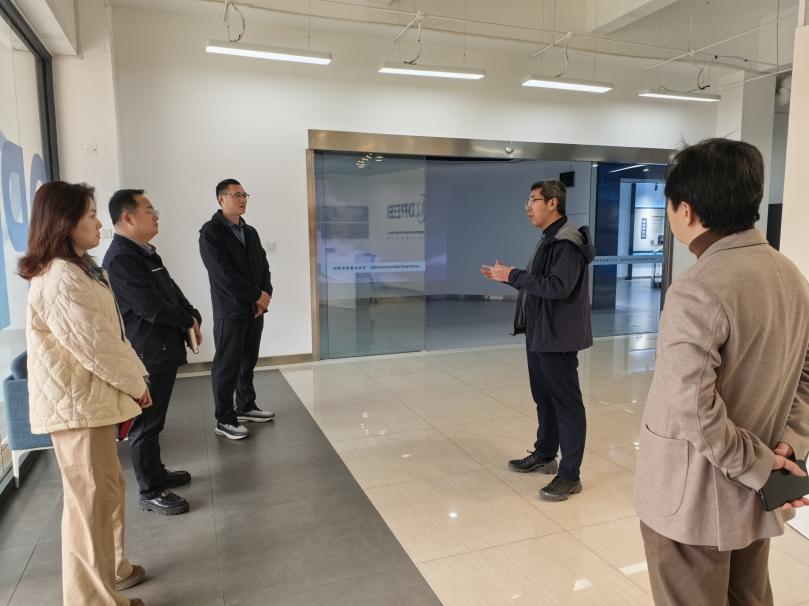
The college delegation briefly introduced its disciplinary layout, distinctive majors, research strength and achievements in talent cultivation. Taking this visit as an opportunity, both sides aim to build a long-term cooperation bridge. Focusing on student employment and practice, innovation and entrepreneurship education, research project tackling, and the transformation and application of scientific and technological achievements, the two parties will explore a cooperation mechanism featuring university-enterprise collaboration, supply-demand docking and resource sharing. It will help broaden practical and employment platforms for students and inject university talents and scientific research strength into the high-quality development of the base.
General Manager Li Guomao, person in charge of the base operation, extended a warm welcome to the college delegation. He elaborated on the base’s development plans, policies for the introduction and cultivation of overseas talents, and demands for industrial cooperation. He stated that the base will actively organize enterprises to participate in special job fairs held by the university. Practical cooperation will be carried out in the construction of internship and employment bases, joint cultivation of innovation and entrepreneurship projects, as well as industry-university-research collaborative innovation. Both sides will contribute to the training of high-quality professional talents and the high-quality development of regional industries.
Both sides conducted in-depth discussions on future cooperation directions and reached initial consensus in such areas as student internship and employment, innovation and entrepreneurship guidance, sharing of scientific research resources, and joint technological research and development. This lays a solid foundation for targeted follow-up connection and the implementation of specific cooperative projects.