


The Department of Marine Science Holds Its First Teaching and Research Meeting of 2026 to Chart a New Course for Discipline Development
To thoroughly implement the requirements of the university’s “Pioneer Plan,” further strengthen the foundation of program development, and accelerate the establishment of the doctoral program in Marine Science and the cultivation of top-tier talent, the Department of Marine Science at the School of Marine and Environmental Sciences held its first annual teaching seminar on January 14. Under the theme of “Enhancing Teaching Quality, Boosting Research Efficiency, and Advancing Disciplines Together,” the meeting systematically mapped out the development path for the coming year. Professor Liu Hongyan, the department chair, presided over the meeting, which brought together all faculty members. The session was characterized by a lively, pragmatic, and efficient atmosphere, successfully setting the direction and building consensus for the year’s work.
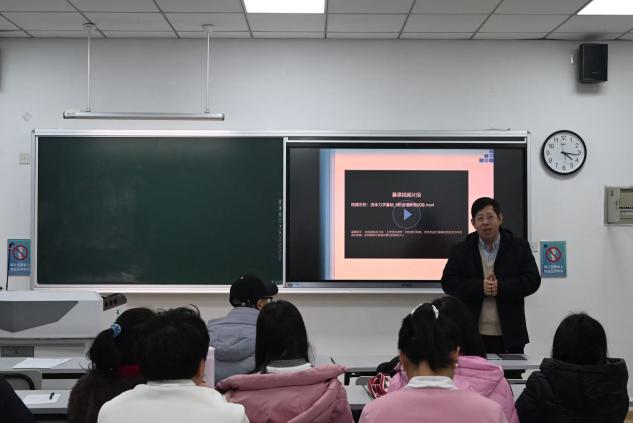
The conference kicked off with a relaxed and lively icebreaker activity. Professor Liu Hongyan, the department chair, quickly energized the atmosphere with a fun game, fostering a sense of camaraderie among the faculty and laying a solid foundation for the in-depth discussions that followed. The session then moved on to the new faculty teaching demonstration, where three newly hired instructors—Sun Yueling, Shen Jiawei, and Zhao Xiangwei—each delivered a 10-minute micro-teaching presentation. All three utilized the BOPPPS instructional design model, demonstrating clear objectives and well-structured lesson plans that showcased their solid teaching fundamentals. The entire session was recorded to facilitate subsequent review and improvement. Following the demonstrations, Associate Dean Professor Zhao Liang, Professor Song Donghui, and Associate Researcher Shang Xiaomei provided detailed feedback to each participant. While acknowledging their strengths, they also offered constructive suggestions for improvement to help the new faculty members integrate quickly and accelerate their professional growth.
To further promote best practices in teaching, Associate Researcher Liu Haijiao—a recipient of numerous teaching awards—delivered a model lesson. By skillfully integrating the latest AI technologies, she engaged students deeply in the classroom, demonstrating a vivid example of teaching innovation in the digital age and sparking widespread resonance and lively discussion among the participating faculty. During the session on teaching experience exchange, Associate Professor Zhang Qingtian explored pathways for integrating AI technology into course instruction, while Professor Liu Hongyan provided an in-depth analysis of the core logic of instructional design.
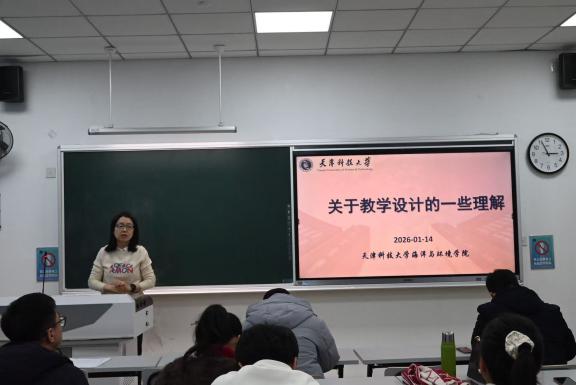
During the session on project applications, Professor Sun Qun provided an overview of the latest reforms at the National Natural Science Foundation of China; Associate Professor Dong Chunming shared insights on communication and practical experiences in university-industry collaboration; and Associate Professor Ding Lei offered a systematic analysis of the full-process management of marine engineering projects, drawing on specific case studies. These informative presentations proved highly beneficial to the faculty members in attendance.
Associate Professor Zhang Guicheng, Deputy Head of the Department, reviewed the progress made in disciplinary development over the past year, provided an objective analysis of the current shortcomings in program development, and proposed targeted improvement plans and implementation strategies for 2026.
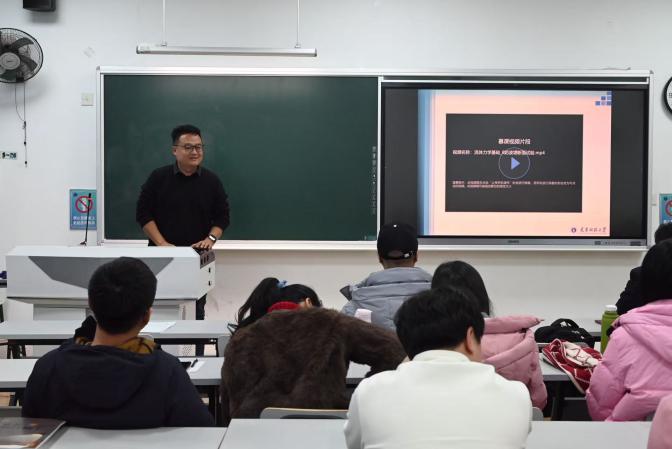
Professor Zhao Liang, Vice Dean, spoke highly of this teaching and research meeting, describing it as “substantive, highly targeted, and fruitful,” and offered specific expectations and recommendations for the Department of Marine Science’s future work.
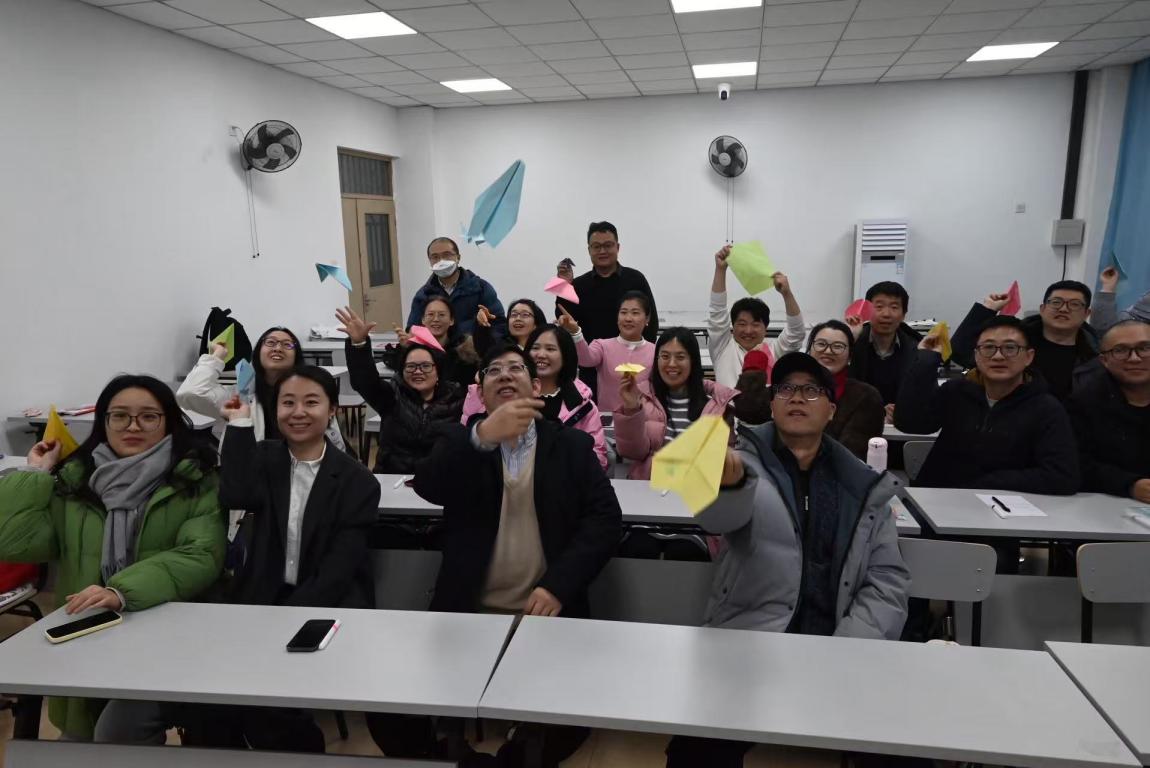
Toward the end of the meeting, Associate Professor Zhang Jing, the deputy director, organized a special activity titled “Write Down Your New Year’s Wishes.” The faculty members wrote down their hopes for 2026 on colorful paper and folded them into paper airplanes. These paper airplanes, filled with hope, floated lightly through the venue, symbolizing everyone’s shared vision of working together to build a brighter future.
The successful convening of this teaching and research conference has not only clarified the direction for the Department of Marine Science’s efforts in teaching reform, scientific innovation, disciplinary development, and talent cultivation for the coming year, but has also further strengthened the cohesion and unity of the faculty. The Department of Marine Science will seize this opportunity to continue deepening educational reforms, reinforce its disciplinary strengths, and enhance its capabilities in scientific research and community service, thereby making new and greater contributions to cultivating more high-caliber marine science professionals and supporting the national strategy to build China into a maritime power!